

New Study Identifies 12 Shopping Addiction Red Flags That Shouldn’t Be Ignored

A shopping addiction isn't just about an empty wallet; it takes a toll on relationships, well-being, and security.
Compulsive shopping shouldn’t be taken lightly. It holds deeper implications than an empty wallet.
Being addicted to shopping will cost people more than their hard-earned money. Much like gambling, it can ruin lives and relationships.
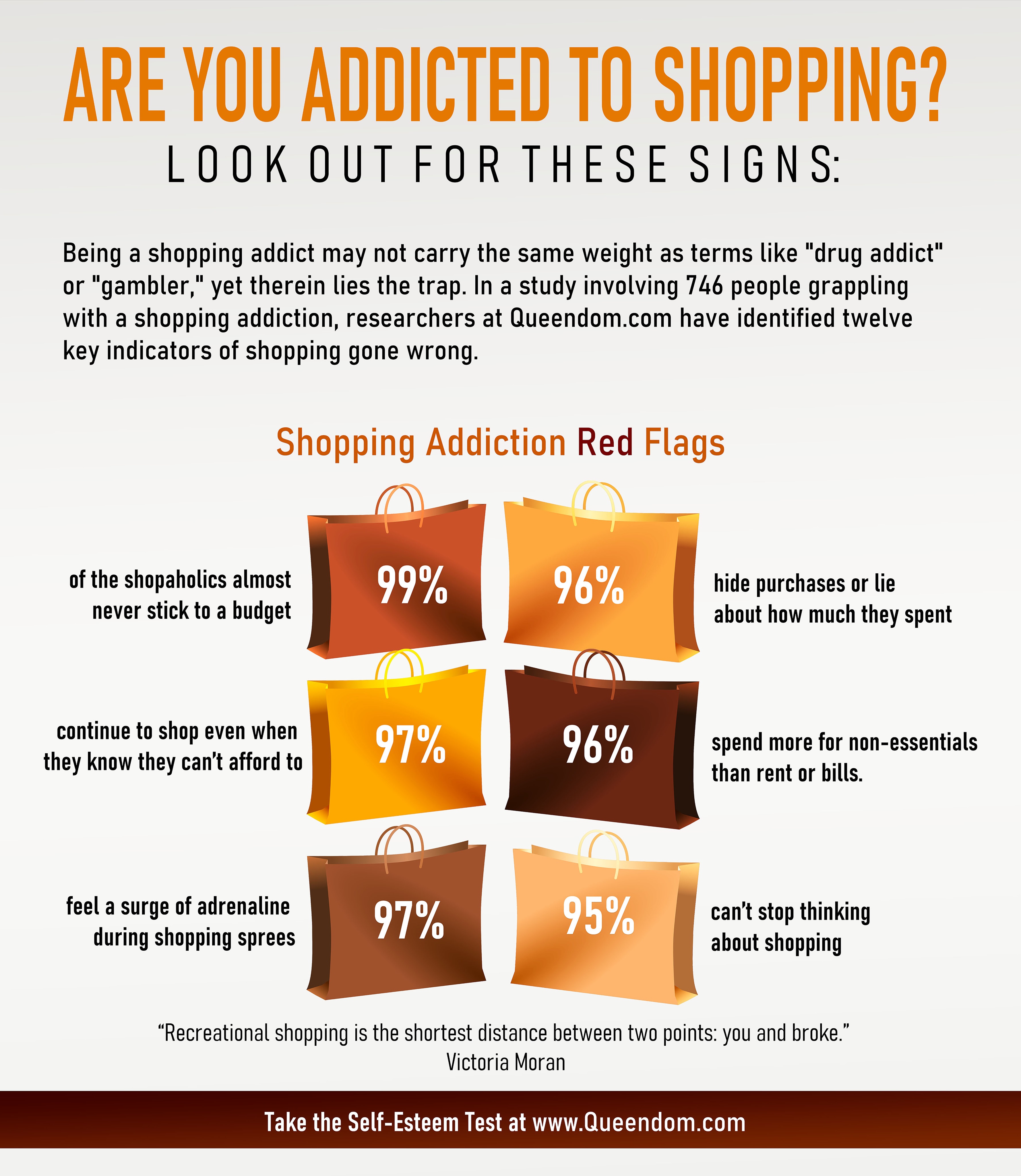
MONTREAL, QUEBEC, CANADA, April 7, 2026 /EINPresswire.com/ -- Being a shopaholic may not carry the same weight as terms like "drug addict" or "gambler," yet therein lies the trap. Indulgent spending is not an innocuous habit; the truth is, the adrenaline rush from excessive shopping can swiftly spiral out of control. Compulsive shoppers may find themselves caught in its grip before they even realize it. Unfortunately, by the time they recognize the extent of their problem, it's often too late to undo the damage. In a comprehensive study involving 746 individuals grappling with a shopping addiction, researchers at Queendom.com have identified twelve key indicators of shopping gone wrong.
STUDY HIGHLIGHTS
Following an in-depth analysis of data collected from 746 individuals who completed the Shopaholic Test, the study unveiled significant insights into their behavioral patterns:
• Red flag #1: Not sticking to a budget.
An overwhelming 99% of the shopaholics consistently exceed their spending limits. While their intent might be to only spend a fixed amount, they almost never adhere to it.
• Red flag #2: Ignoring financial constraints.
A staggering 97% will continue to shop even when they are well aware they can’t afford to.
• Red flag #3: Getting a “high” from shopping.
A striking 97% experience a surge of adrenaline during shopping sprees, indicating a profound emotional connection to the act of spending.
• Red flag #4: Lying about shopping.
An alarming 96% resort to hiding purchases from loved ones or lying about how much they spend, underscoring a pattern of deception and financial secrecy.
• Red flag #5: Prioritizing non-essential purchases over essential ones.
Forget about budgeting for rent or bills—96% of the shopping addicts funnel their funds into luxuries they don’t really need.
• Red flag #6: Thinking obsessively about shopping.
When they’re not shopping, they are thinking about shopping. A staggering 95% of shopaholics are haunted by visions of their next purchase, trapping themselves in an endless loop of consumerism.
• Red flag #7: Using shopping to deal with negative emotions.
When life throws lemons, some turn them to lemonade; but for 94% of our shopaholics, it's retail therapy that's on the menu. Anger, stress, or sadness all dissolve in the aisles of a shopping mall, replaced by the temporary euphoria of a new purchase.
• Red flag #8: A collection of purchases that still have their price tags on.
A peek into the homes of shopping addicts will reveal a treasure trove of unused purchases gathering dust. A shocking 93% of shopaholics accumulate possessions, emphasizing the impulse-driven aspect of this addiction.
• Red flag #9: An obsessive need to keep up with the Joneses.
For 89% of shopaholics, envy becomes a driving force that compels them to covet everything from their neighbor's new phone to their best friend's designer handbag.
• Red flag #10: Not being able to leave a store without buying something.
Exiting a store empty-handed is highly unlikely. A formidable 86% of shopaholics find themselves unable to resist the need to make a purchase.
• Red flag #11: Maxing out credit cards.
It's a familiar tale of financial free-fall: 84% of shopaholics have pushed their credit cards to the absolute limit. The aftermath? A mountain of debt looming ominously on the horizon.
• Red flag #12: Feeling guilty about purchases.
Despite the allure of a shopping spree, a sobering reality sets in for 75% of shopaholics: a nagging sense of remorse or guilt. It's the emotional hangover that follows the splurge—a poignant reminder of the consequences of their indulgence.
“A shopping addiction shares similarities with gambling. You don’t really pay attention to the money that’s slipping out of your hands,' explains Dr. Jerabek, president of Queendom.com. One moment, you’re riding the high of a shopping spree; the next, you’re filled with self-loathing. The feeling of euphoria is short-lived, and the only remedy a shopaholic seeks is more shopping, perpetuating the cycle."
However, it’s not just the financial impact of excessive spending that makes a shopping addiction problematic, warns Dr. Jerabek. There is also the fallout with loved ones.
“Nearly half of the shopaholics in our sample have experienced relationship breakdowns due to their spending becoming a source of conflict. Three-quarters of our shoppers have resorted to borrowing money to fuel their purchases or to pay the mounting credit card debt, with a disturbing 49% resorting to credit card theft from family or friends. Like any addiction, things can spiral quickly, leaving shopaholics in over their heads. If you recognized yourself in some of the red flags, then it’s time to be honest and seek help. There are support groups for shopping addiction, akin to Alcoholics Anonymous and Gamblers Anonymous.”
About Queendom
Queendom originally appeared on the internet scene in 1996. Since its inception, it has become a pre-eminent provider of personality, career, IQ, and attitude assessments. Queendom’s team is comprised of psychologists, test developers, researchers, statisticians, writers, and artificial intelligence experts (see more at https://archprofile.com/corporate).
Ilona Jerabek
Queendom.com (by PsychTests)
media@queendom.com
Visit us on social media:
LinkedIn
YouTube
Legal Disclaimer:
EIN Presswire provides this news content "as is" without warranty of any kind. We do not accept any responsibility or liability for the accuracy, content, images, videos, licenses, completeness, legality, or reliability of the information contained in this article. If you have any complaints or copyright issues related to this article, kindly contact the author above.
